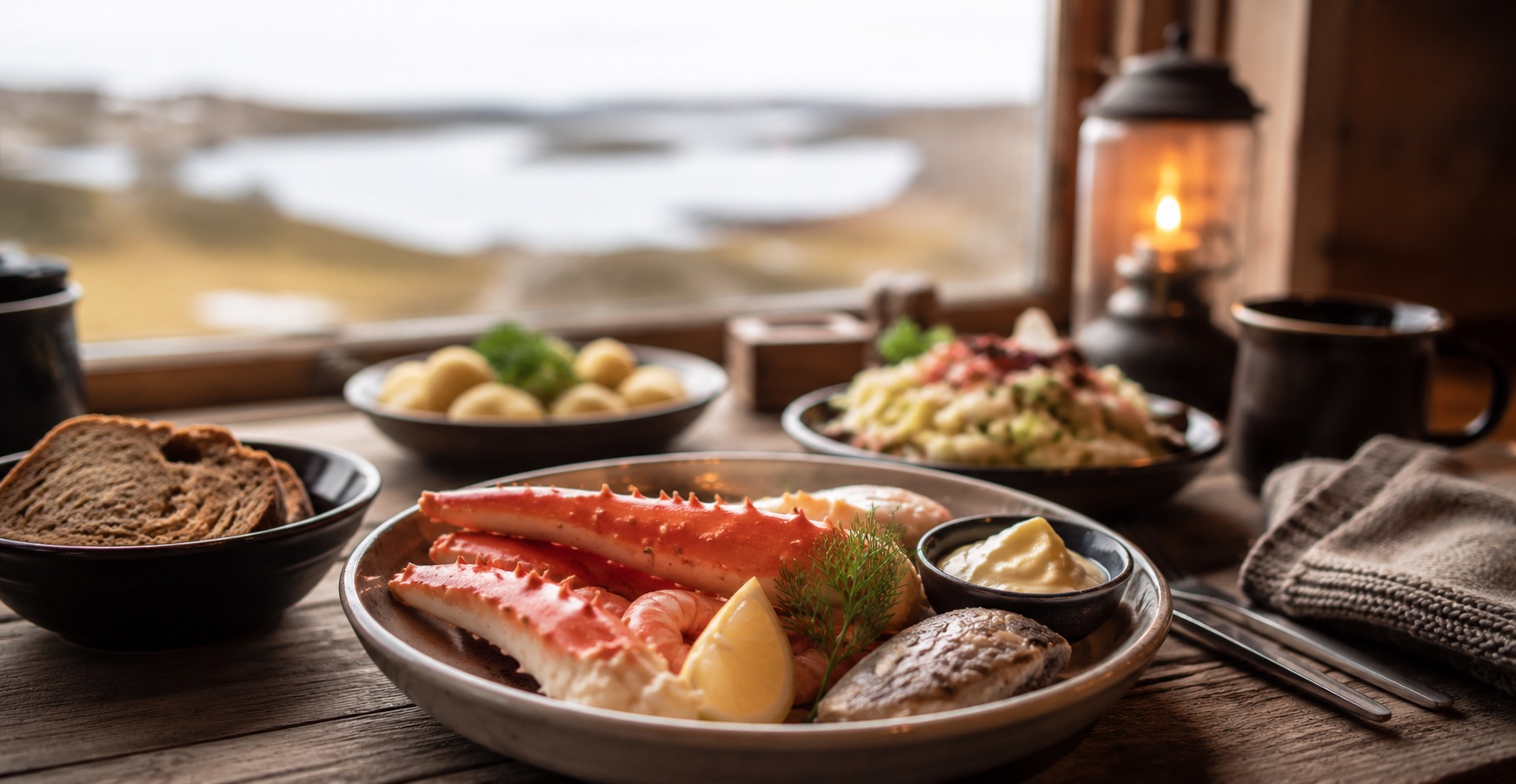
From sea to table — the world's northernmost way
Varanger is not known for a dense restaurant scene or trendy food culture. But it might be the best place in the world to eat king crab, halibut and cod — fresh from the sea, prepared simply, with a flavour you won't forget. The ingredients here are so good they need little help.
The king crab — the king of the dinner table
A king crab caught in Varangerfjord and eaten the same day is some of the best thing you can put in your mouth. The meat is white, firm and sweet — completely different from what you buy frozen in the shop. Most safaris include catching and dinner: the crab is boiled on board or at the quay, served with butter-fried bread and lemon.
King crab meat is in the claws and legs. Eating it is a hands-on job — and that's the point. Take off your jacket, roll up your sleeves and get started. It's all part of it.
🦀
up to 15 kg
Live weight king crab
🐟
up to 200 kg
Halibut — the Atlantic's largest flatfish
🎣
jan–april
Cod season and saithe at their best
🦌
year-round
Reindeer meat from Sámi herding
🟠
august
Cloudberry season — short and hectic
🍽️
fresh = best
The ingredients need little help
Fish — cod, halibut, Arctic char and saithe
If the king crab is the king, then cod is the people's fish. The skrei — the mature, spawning cod that enters from the Barents Sea in winter — is the very backbone of northern Norwegian food culture. Local cod is a completely different matter from farmed fish: firmer, whiter, with a pure sea flavour. Everything is made from it, from simple boiled fish to dried fish and bokna fish — cod that is partially wind-dried, a speciality that many in the north prefer over fresh fish.
The great winter dish is mølje: boiled cod served with liver and roe, often with boiled potatoes and flatbread. It is simple, rich and filling — winter food as the coast has eaten it for generations. If you get the chance to have authentic mølje in season (January–April), say yes.
Halibut is the Atlantic's largest flatfish and is found in Varangerfjord for much of the year. A piece of halibut fried in butter with salt and pepper is unpretentious and fantastic at the same time. In addition comes saithe and haddock from the sea, and from the rivers and waters inland: Arctic char and whitefish — freshwater fish with a fine, clean flavour that are smoked, cured or fried. Sea trout and salmon from the Varanger rivers also belong on the table in season.
Reindeer and lamb — meat from the plateau and the coast
Varanger is not just sea. On the plateaus, Sámi herding is practised, and reindeer meat is a cornerstone of the kitchen. It is lean, dark and flavourful, with a faint game and herb tone from everything the animals graze on. The classics are finnbiff (thin strips fried with cream, mushrooms and juniper berries), bidos (a traditional Sámi feast soup with reindeer meat, potatoes and carrot) and suovas — lightly smoked reindeer meat sliced into pieces. Reindeer meat is also sold smoked and dried, perfect for hiking.
Along the coast, sheep graze on salt, herb-rich outfield pasture right out to the sea. Lamb meat from here — often called fjord or coastal lamb — gets a mild, fine flavour from the special vegetation. In autumn, after slaughter, fresh lamb from local farms is some of the best you can get. Ask for local meat at restaurants; many use reindeer and lamb from their own region when they can.
🟠
Cloudberries — gold from the plateau
Cloudberries grow on moor and high mountain in Finnmark and are one of Norway's most sought-after ingredients. The season is short — often just two to three weeks in August. Eaten fresh with cream, made into jam, or used in cloudberry cream. Find a local who can show you where they grow — good places are kept secret.
The plateau's larder — berries, herbs and mushrooms
The outfield in Varanger is a larder for those who know what to look for. In addition to the cloudberries, blueberries, lingonberries and cowberries ripen throughout autumn — the last two are sour, hardy and perfect with meat and dessert. Mushrooms such as porcini and chanterelle appear in the lush valleys and birch woodlands inland from the coast.
Wild herbs used include, among others, angelica — an ancient Arctic useful plant — and mountain sorrel, along with juniper berries as seasoning for game dishes. These are short seasons and fragile nature: pick gently, take only what you need, and let the rest stand.
Sámi and Kvens food culture
The food in Varanger carries three cultures within it. The Sámi coastal food tradition is closely tied to the sea and the plateau: dried and smoked fish, reindeer meat, blood and offal dishes where little went to waste, and berries from the moors have been cornerstones of the diet for thousands of years. Varanger Sámi Museum in Varangerbotn (Várjjat Sámi Musea) puts food culture in context with the rest of life along the coast.
The Kvens and Finnish heritage, strongest in villages such as Bugøynes (Pykeijä), also left marks in the kitchen — rye bread, fish soup and a sauna and food culture closely tied to the fjord. Together with the Norwegian coastal tradition, this gives Varanger a kitchen that is simpler, but also more honest and more local than what you find in most other places.
Today, several local establishments serve food built on these roots. There is no dense restaurant scene, but the quality of the ingredients makes up for it. Ask locally — there is more than it appears.
Tips for the food experience
- 🦀Book a king crab safari that includes dinner — then you eat the crab fresh on board or at the quay.
- 🎣In the winter season (jan–april): ask for authentic mølje — boiled cod with liver and roe. It is the coast's feast meal.
- 🏪Find a local fish shop and buy halibut, saithe or bokna fish. Cheap, fresh and some of the best you'll eat.
- 🦌Look for finnbiff, bidos or suovas on the menu — reindeer meat from Sámi herding in the region.
- 🐑In autumn: ask for local lamb from coastal or fjord pasture. Mild, fine flavour from the salty outfield pasture.
- 🟠In August: drive out on the plateau with a bucket. Cloudberries, blueberries and lingonberries await — but pick gently.
Ready for Varanger?
Browse experiences, accommodation and restaurants on the map.