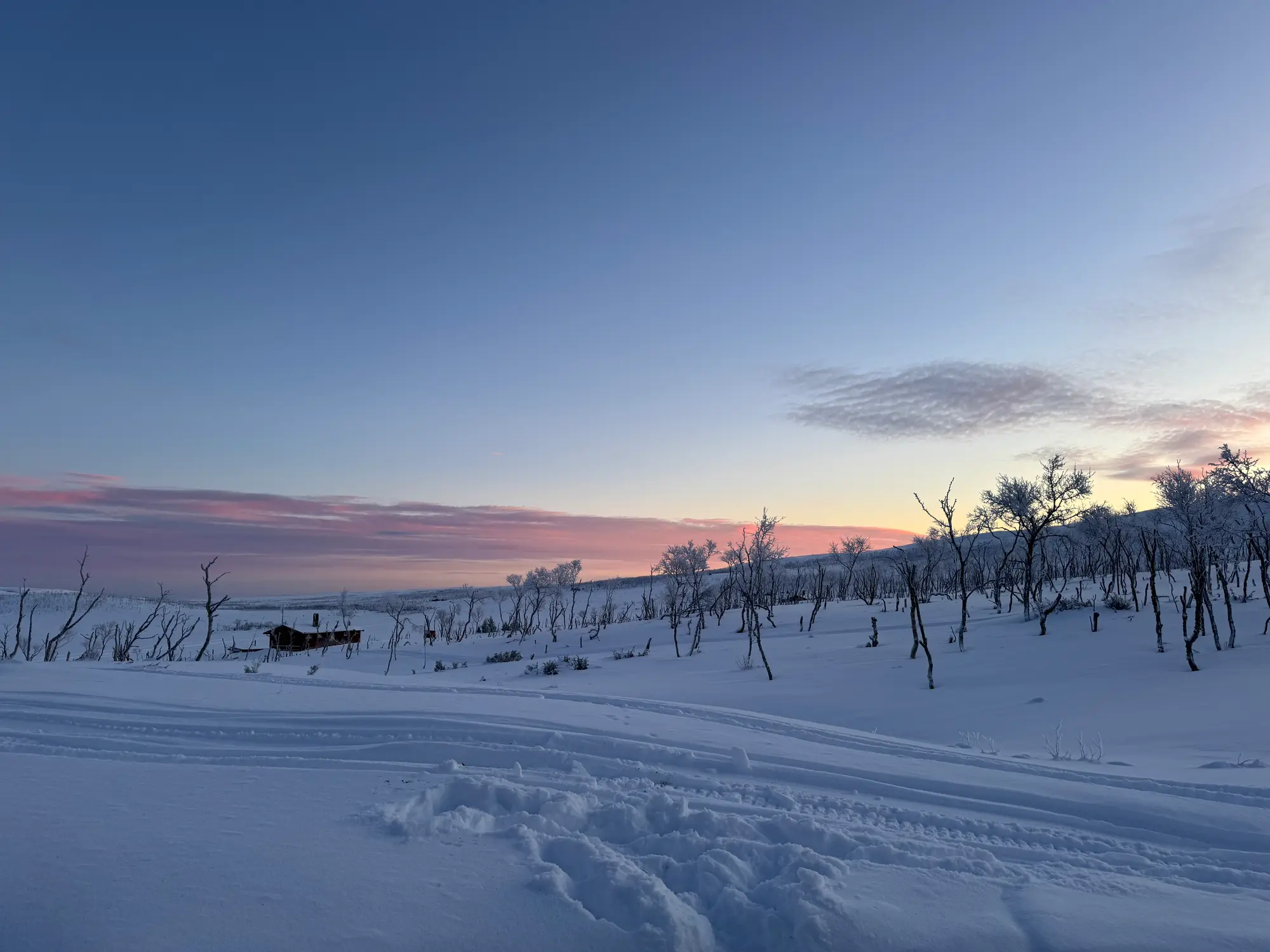
An ancient, arctic tundra landscape
At the far edge towards the Barents Sea, where Norway ends and the Arctic takes over, lies Varangerhalvøya National Park — one of the country's last large, contiguous wilderness areas and among the least visited. The Sámi name is Várnjárgga álbmotmeahcci, the Kven Varenkinniemen kansalistaras. Here there are almost no marked trails, no staffed tourist cabins and no kiosks. Just an endless arctic expanse, block scree as far as the eye can see, river valleys flowing towards the sea, and wildlife adapted to some of the harshest conditions on mainland Norway.
The park was established by royal resolution in 2006 and covers 1,804 square kilometers in the municipalities of Båtsfjord, Vardø, Vadsø and Nesseby. For those seeking true silence, wild nature and a sense of being completely alone in the world, there are few places like this in Europe.
A landscape older than the ice ages
What makes Varangerhalvøya completely special is that the landscape is older than the ice ages. Most places in Norway had their mountains polished, scoured and shaped by the glaciers that covered the land. On Varangerhalvøya, the opposite happened: the ice sheet here was frozen to the ground and barely moved. Instead of shaping the landscape, the ice preserved it. With the exception of the many V-shaped valleys carved out by flowing water, the terrain today looks much as it did before the last ice age.
The result is one of Scandinavia's most unusual landscapes. Almost a third of the peninsula consists of block scree — endless fields of frost-shattered stone with almost no vegetation. When the inland ice finally melted, it left behind around three thousand ring-shaped moraines (palsas), a landform type that is otherwise known from only a very few places in the world, and there in far smaller numbers. For geologists, Varangerhalvøya is an open textbook in arctic landscape history.
📅
2006
Established by royal resolution
📐
1,804 km²
Area — Norway's northeasternmost national park
🏛️
4 municipalities
Båtsfjord, Vardø, Vadsø and Nesseby
🪨
~3,000
Unique ring moraines left by the inland ice
Tundra, palsa bogs and block scree
Varangerhalvøya lies north of the tree line. No forest grows here — instead the arctic tundra spreads out: an open, windswept wide landscape of lichen, heather, dwarf birch and grass, broken up by bare mountain ridges and large boulder fields. It is one of few places on the Norwegian mainland where you can truly experience genuine arctic tundra, as it appears further north on Svalbard and in Siberia.
Between the dry plateaus lie rich wetlands and palsa bogs — bogs with frozen peat mounds that rise above the ground because they contain a core of ice. The palsa bogs are climatic witnesses: they are found only where the average temperature is low enough for the ground ice to survive the summer, and they are among the natural types most vulnerable to a warmer climate. The rivers in the park — in valleys such as Komagdalen, Syltefjorddalen and Sandfjorddalen — flow towards Varangerfjorden and the Barents Sea, and bring life to lush green corridors in an otherwise barren landscape.
Wildlife on the plateau
Few places in Norway have such a pronounced arctic wildlife. Varangerhalvøya is one of the country's most important habitats for arctic foxes — one of Norway's most threatened mammals. Unlike arctic foxes further south in the country, the Varanger population is strongly tied to the coast and also includes marine species on the menu, but reproduction still depends on good lemming years. When small rodents are abundant, the entire plateau blooms with life.
In good lemming years, snowy owls nest in the park — the white, yellow-eyed arctic owl that is the very symbol of the tundra. Then there is also an abundance of arctic hares in the tussocky terrain, and small rodent specialists like Norwegian lemmings have many offspring on the wing. The dotterel is considered the park's characteristic species, and along the coast and on the plateaus you find waders such as ringed plovers, little stints and little auks. Among birds of prey you see white-tailed eagles over the coast, as well as merlin and the rare gyrfalcon. Reindeer graze on the peninsula year-round — Sámi reindeer herding is practiced here, and there is a good chance of meeting herds of reindeer on migration.
🦊
The arctic fox — Norway's arctic challenge
The arctic fox is critically endangered in Norway, and Varangerhalvøya hosts one of the most important remaining populations. It is closely monitored, and active work is being done to save the few that remain. If you see an arctic fox in white winter coat against the snow, you have seen one of the country's rarest animals — keep a good distance and never disturb a den or young.
Hikes and access — a park without trails
Varangerhalvøya National Park is not a park with trodden trails and marked routes. With one exception, there are neither markings nor cairns: from Komagdalen there is a roughly 4 kilometer long birdwatching trail with information boards about the birds that use the valley. Beyond this short, prepared trail, you must navigate yourself with map, compass or GPS. In return, there are a series of small, unstaffed and open cabins — originally telegraph inspector cabins — scattered from Komagdalen and inward towards Oarddojávri, which provide shelter along the way.
The most common entry points are Komagdalen and Syltefjorddalen. To reach Komagdalen, you turn off just before the campsite at Komagvær and drive approximately 7 kilometers up a dusty gravel road to a parking area at the end of the valley. To Syltefjorddalen, there is a narrow 3.5 kilometer road with few passing places and often in poor condition due to water from the steep slopes — here you can park at the boundary of the protected area and continue on foot or by bike. From Syltevannsmoen, along the gravel road between Hamningberg and Vardø, Telegrafhytta in Sandfjorddalen is around two hours walk away.
⚠️
You must be able to fend for yourself
There is no mobile coverage in large parts of the park, no shops and no rescue stations. Bring a map and compass (download offline maps beforehand), more food and clothes than you think you need, and always wind and rain gear — the weather at the Barents Sea changes in minutes. Always tell someone about your route and when you are expected back.
When should you go?
The park is open year-round, but for most people summer is the natural choice. From June to September, most of the snow is gone, the tundra is lush and green, birdlife is at its most active and the midnight sun means you can hike at any time of day. Early summer is peak season for nesting birds and is the best time for birdwatching on the plateaus.
Spring and autumn offer great chances to see reindeer on migration and dramatic light displays over the landscape, but weather conditions become increasingly demanding. In winter, the peninsula transforms into a closed, white and rock-hard arctic landscape — beautiful, but only for experienced and well-equipped visitors. Remember that motorized travel is strictly limited in the national park; snowmobile trails in the region run outside the park itself.
Practical tips before your trip
- 🗺️Download offline maps before you go — use Norgeskart, UT.no or Outdooractive. Mobile coverage is minimal inside the park.
- 🧭Bring a map and compass in addition to GPS, and know how to use them. There are no markings except the birdwatching trail in Komagdalen.
- 🎒Pack for changing weather: wind and rain gear, warm layers and extra food. At the Barents Sea, summer days can become winter cold.
- 🦟Midges and mosquitoes can be troublesome from June to August. Bring insect repellent and possibly a mosquito net.
- 🛖The open telegraph cabins provide shelter, but are basic and unstaffed — bring your own equipment, and always clean up after yourself.
- 📞Leave a trip plan with someone at home. Consider a personal locator beacon (PLB) on longer trips and when traveling along the coast.
🌱
Travel gently — the tundra grows slowly
Arctic vegetation is extremely fragile, and footprints in the tundra can persist for decades. Follow existing tracks where they exist, do not drive motorized vehicles on bare ground, keep distance from reindeer herds, and do not disturb nesting birds or arctic fox dens. Take all rubbish out with you — you leave behind only footprints, and preferably not even those.
Ready for Varanger?
Browse experiences, accommodation and restaurants on the map.