Norway's easternmost city — and one of the strangest
Vardø is a place where history sits in the walls and in the very place itself. Here 91 women and men were burned as witches in the 17th century — Europe's second-highest number after Scotland. Here Russian merchants conducted Pomor trade for 200 years. Here the midnight sun arrived three days earlier than anywhere else in Norway. And here architects Peter Zumthor and Louise Bourgeois erected one of the country's most talked-about memorials.
Vardøhus Fortress — since the 1300s
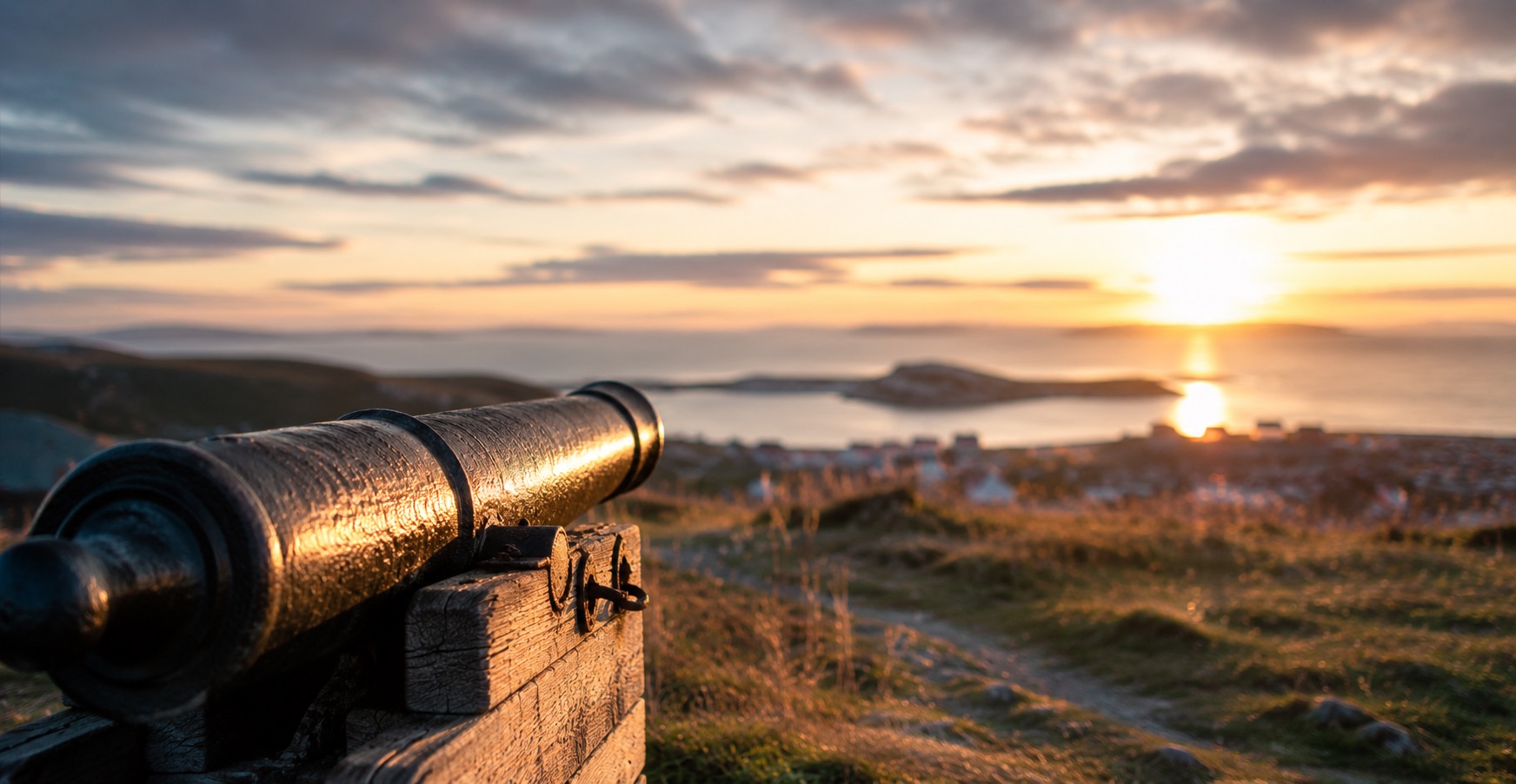
Vardøhus Fortress is the oldest fortress in North Norway. The first castle was built in 1306 — on the orders of King Håkon V — to mark Norwegian sovereignty in the eastern part of the realm. The fortress we see today was built in 1734, and it is well preserved today.
The fortress is one of Norway's smallest, but one of the best maintained. It is open to visitors in the summer, and from the bastions you have a good view of Varangerfjorden, the Barents Sea and Hornøya. A salute cannon is fired on National Day.
Steilneset memorial — for those burned as witches
Between 1601 and 1692, 91 people in Finnmark were accused of witchcraft and burned at the stake — over half of them in Vardø and Vadsø. This is the highest number per capita in Scandinavia, and the second highest in Europe. The victims were mostly women, but also men — fishermen, farmers, housemaids.
In 2011, then Prime Minister Jens Stoltenberg and Queen Sonja unveiled a memorial of international standing: Steilneset. The architect is Swiss Peter Zumthor — one of the world's most renowned architects, a Pritzker Prize winner. The artwork inside was created by French/American artist Louise Bourgeois, who died the same year.
The memorial consists of two parts: a long wooden building with 91 burning lamps (one for each victim), and a glass pavilion with a burning chair and mirrors. It is haunting and beautiful at once, and it draws visitors from around the world.
🕯️
Steilneset
One of Norway's most important contemporary artworks. Open in the summer. Free admission. Set aside at least an hour — it is not a place you rush through.
The Pomor era — 200 years of Russian trade
From the early 1700s until the Russian Revolution in 1917, Russian merchants — pomors — conducted intensive trade along the Norwegian coast. They came with their characteristic lodjas (wooden boats) from the White Sea coast, loaded with rye flour, salt and other goods, and returned home with fish.
Vardø was the center of this trade and gained city status from the king in 1789 partly due to Pomor traffic. At its peak, hundreds of Russians spent the summer in Vardø. A special 'Pomor pidgin' — a mixed language of Norwegian and Russian — developed and was used in trade.
Pomor trade disappeared abruptly in 1917. Today the Pomor Museum in Vardø tells the story through objects, pictures and documents from this unique period.
Hornøya — the bird rock at the edge
Just over a kilometer outside Vardø lies Hornøya — Norway's easternmost nature reserve and one of Norway's most important breeding sites for seabirds. The island is home to puffins, razorbills, guillemots, auks, kittiwakes and cormorants in enormous numbers. In the summer it is almost impossible to hear your own thoughts.
Boat to Hornøya departs daily from Vardø harbor in the summer. The journey takes about 15 minutes, and you can walk on your own on the marked trails. The birds are so trusting that they almost land on your head.
📅
1306
First Vardøhus Fortress built
🕯️
91
Victims of witch persecution
🚢
1700–1917
The Pomor era — Russian trade
☀️
May 15
First day of midnight sun in Norway
Ready for Varanger?
Browse experiences, accommodation and restaurants on the map.