One of the world's top 100 sites
The northeasternmost corner of Norway is one of the world's finest birdwatching destinations. Varanger is listed in "Top Birding Sites of the World" — an exclusive circle where the region sits alongside the Galapagos and the Okefenokee Swamp. The reason is a unique interplay between sea, coast, birch forest and Arctic tundra.
Why Varanger?
Varanger sits at the entrance to the Barents Sea, where warm Atlantic currents meet cold Arctic water. This creates a rich marine environment attracting enormous numbers of seabirds. At the same time there is birch forest, river deltas, wetlands and bare fells in the immediate vicinity — providing food and nesting opportunities for an extraordinary variety of species.
The peninsula is also a hub for birds migrating between Siberia and Western Europe. Rarities from Russia and North America appear regularly, making Varanger an unmissable destination for serious birders.
🐦
200+
Recorded bird species
🏆
Top 100
Best birding sites in the world
🏠
12
Architect-designed bird hides (Biotope)
🌍
Europe no. 1
For Steller's eider in winter
The stars — the species you come for
The Steller's eider is Varanger's "face species". The dark blue male with its teardrop-shaped head shield is one of the most beautiful seabirds in the world, and the Varangerfjord is one of the most important overwintering sites for the species in Europe. Best time is February–April.
White-tailed eagles are present year round and almost impossible to miss along the fjord. With a wingspan of up to 2.4 metres they are Europe's largest birds of prey. Barnacle goose, great northern diver, dunlin and bar-tailed godwit are other sought-after species. In spring large flocks of waders and ducks pass through on their way to breeding grounds further north and east.
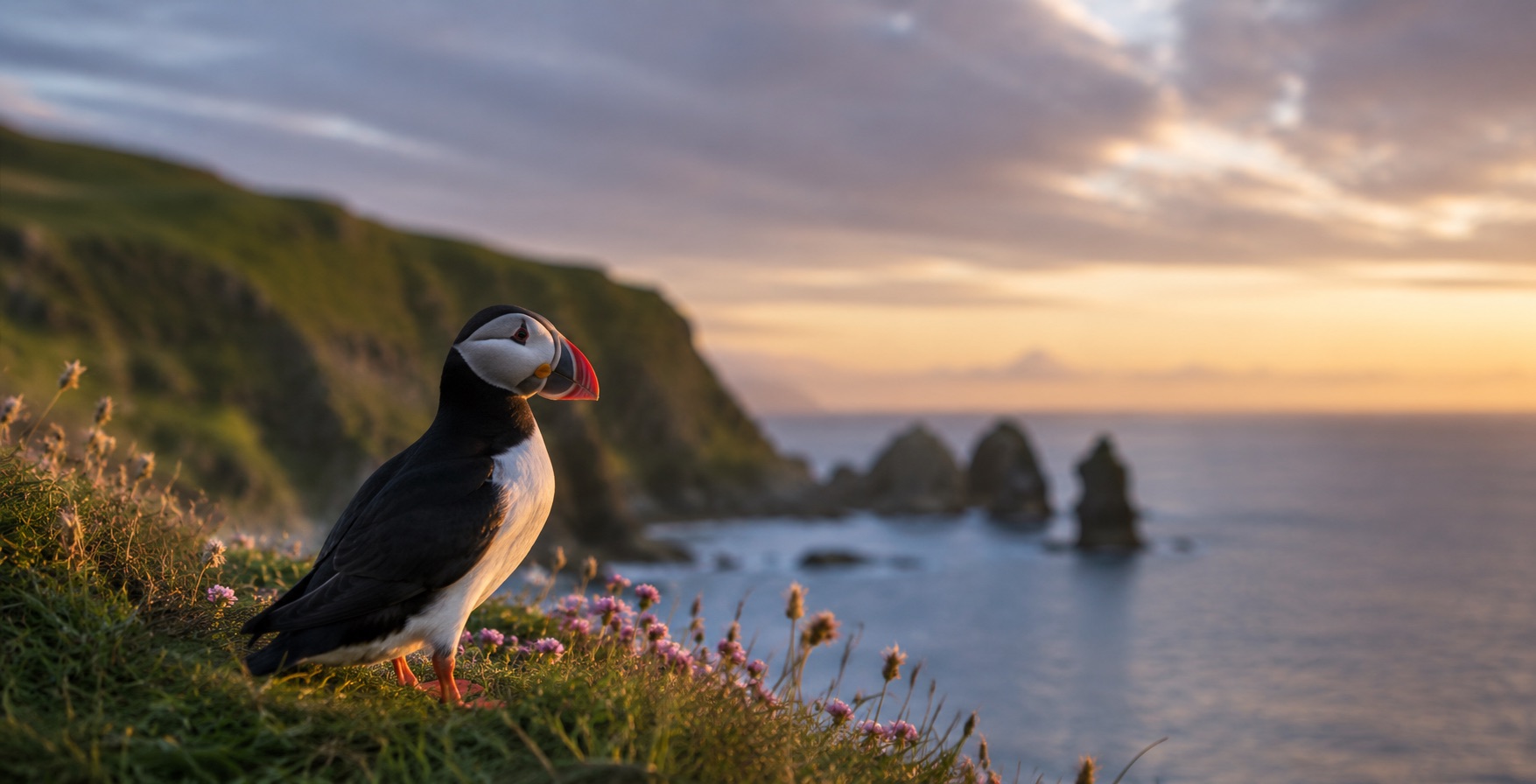
Hornøya outside Vardø is Norway's easternmost bird cliff — a nature reserve where puffins, little auks and guillemots breed in densely packed rows on the steep rock face. A boat trip out to Hornøya is mandatory for any ornithologist.
🏛️
Biotope's bird hides
The Norwegian architecture practice Biotope has designed 12 unique bird hides along the Varangerfjord. Each hide is adapted to the specific location and the birds that can be seen there — and they are remarkable architectural works in their own right, covered by architecture publications worldwide.
Best time to visit
Varanger is worth visiting almost any time of year. The winter months (February–March) are best for sea ducks such as Steller's eider and long-tailed duck. Spring (April–May) brings migrating birds and the first breeding species. Summer (June–August) offers midnight sun and fledglings. Autumn (September–October) is quiet and beautiful, with good chances of rarities.
Come well prepared
- 🔭Bring binoculars and ideally a telescope. Many seabirds are far out on the fjord.
- 📚The BirdNET app and the species list from BirdLife Norway are useful tools.
- 🚗Driving along the E6 and Rv98 provides many stopping points. Hiring a car is recommended over taking the bus.
- 👢Rubber boots or waterproof shoes are essential — the coastline is muddy and wet.
- 🗓️Check bird reports on Artsobservasjoner.no and Birdlife.no before departure.
Klar for Varanger?
Se opplevelser, overnatting og restauranter på kartet.